

Is this a scam? Tell us what happened.
You got something — an email, a text, a phone call, maybe a letter in the mail. Something felt off. Or maybe it felt totally real and you're just not sure. Either way, you're right to check. That instinct is exactly what this is for.
We're Building This Carefully
— Because People's Savings Depend On It
The GenGuard365 scam checker is currently under development.
We know how badly families need a tool like this right now. We've seen firsthand how sophisticated scams are affecting smart, careful, financially experienced people every single day.
That's why we're not rushing it.
Our goal is to create a calm, trustworthy experience where seniors and families can check suspicious messages without fear, embarrassment, or technical confusion.
Coming soon, you'll be able to:
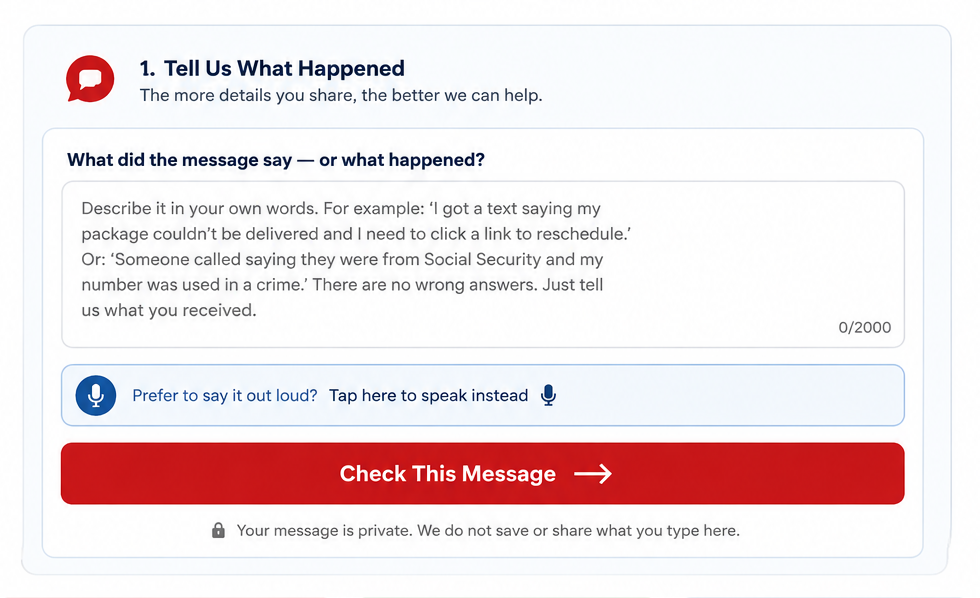
Paste suspicious texts or emails
Describe phone calls in your own words
Get honest guidance about whether something looks dangerous
Learn exactly what to do next
Until then, explore our Scam Alerts and Learn sections to stay informed and protected.
This image below is an example of how easy checking for scams will be, using the GenGuard365 scam checker.

Look at the most recent scam alerts
Scam Questions Seniors and Families Ask Most Often
Is this email a scam?
One of the most common signs of a scam email is urgency. Scammers often pretend to be banks, delivery companies, Medicare, Social Security, or family members asking you to act quickly. Never click links or send money before verifying the sender independently.
What should I do if I sent money to a scammer?
If you sent money to a scammer, contact your bank or credit card company immediately. Ask if the transaction can be stopped or reversed. Change passwords connected to financial accounts and report the scam to the FTC and FBI IC3.
How can I tell if a text message is a scam?
Scam text messages often include fake package delivery alerts, unpaid toll notices, bank fraud warnings, or prize notifications. If the message asks you to click a link, verify personal information, or pay urgently, it may be a scam.
How do scammers target older adults?
Scammers target older adults using fear, urgency, loneliness, trust, and confusion. Many scammers pretend to be government agencies, banks, grandchildren, or tech support representatives to gain trust quickly.
What are the most common scams targeting seniors in 2026?
The most common scams targeting seniors in 2026 include:
Government impersonation scams
Romance scams
Grandparent scams
Medicare scams
Tech support scams
Investment and cryptocurrency scams
Fake bank fraud alerts
Package delivery text scams
What are the warning signs of a scam?
Common warning signs of a scam include:
Urgent requests for money
Requests for gift cards or wire transfers
Threats involving arrest or account closure
Messages asking for passwords or verification codes
Unknown callers demanding secrecy
Links sent unexpectedly by text or email
How can I protect elderly parents from scams?
You can help protect elderly parents from scams by encouraging open conversations, reviewing suspicious messages together, discussing current scam tactics, and reminding them never to send money or gift cards under pressure.
What is the grandparent scam?
The grandparent scam happens when someone pretends to be a grandchild in trouble and asks for money urgently. Scammers often say there was an accident, arrest, or emergency, and ask grandparents not to tell anyone.
What is a government impersonation scam?
Government impersonation scams happen when criminals pretend to be the IRS, Social Security Administration, Medicare, or law enforcement. Real government agencies do not demand immediate payment by gift card, wire transfer, or cryptocurrency.
Where can seniors get help for online fraud and scams?
Seniors can get online fraud help through trusted resources like the FTC, FBI IC3, AARP Fraud Watch Network, local banks or credit unions, and scam-awareness websites like GenGuard365.
Safety Alerts:
Protecting Your Golden Years.
365 Days a Year.
Email: christy@genguard365.com


Home | Is This a Scam? | Scam Alerts | Learn | For Families | Our Story | Partner With Us | Privacy Policy | Terms of Use
GenGuard365 is a resource for education and awareness. We are not affiliated with any bank, government agency, or financial institution. We do not sell your information — ever. If you are in immediate financial danger, please contact your bank directly.
© 2026 GenGuard365 LLC. All rights reserved.